Category: Uncategorized

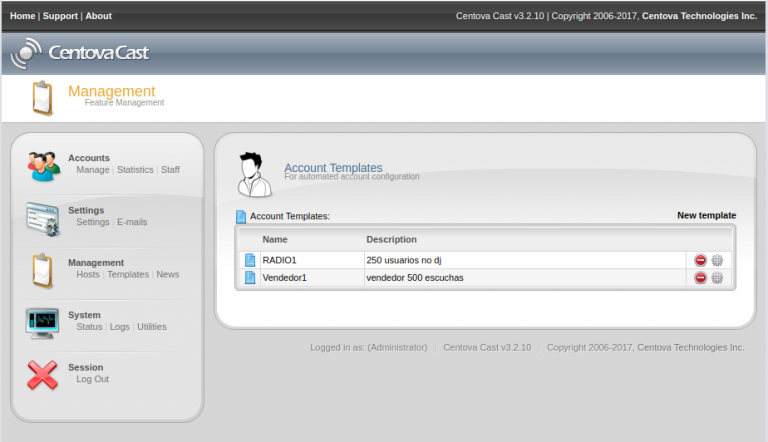
  • Install SSL on Centova Cast

    Install SSL on Centova Cast

    centovacast

    Edit file

    vi /usr/local/centovacast/etc/cc-panel.conf
    

    Find

    listen 2199 default ssl;
    

    Add below

    listen 443 ssl;
    listen 80;
    

    Restart Centova Cast

    /usr/local/centovacast/centovacast restart
    

    At this point, you will be able to access Centova Cast on port 80 at

    http://YOUR_SERVER_IP/login/index.php
    

    To install LetsEncrypt Free SSL certificate, run

    /usr/local/centovacast/sbin/setssl letsencrypt YOUR-DOMAIN.EXTN
    

    Restart Centova Cast

    /usr/local/centovacast/centovacast restart
    

    Now you will be able to access Centova Cast using HTTPS.

  • VestaCP Installer Compromised

    VestaCP Installer Compromised

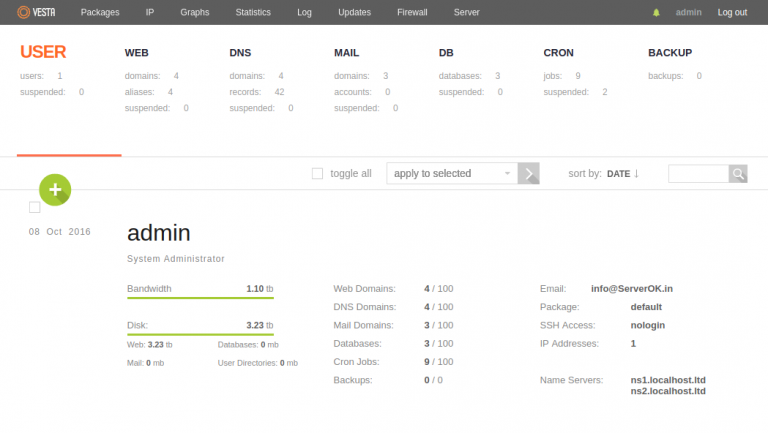
    VestaCP Free Hosting control panel compromised again. Hackers where able to get access to VestaCP infrastcuture server, allowing them to modify installation script, so it sent root password of servers to hacker.

    Here is post from VestaCP on their forum

    I’m sorry about inactivity in this post from our side. It was a complex issue and we were not sure we understand the whole picture. Leak in the installer is just one piece of the puzzle. All pieces together lead to cumulative effect.

    The issue number one

    Our infrastructure server was hacked. Presumably using API bug in the release 0.9.8-20. The hackers then changed all installation scripts to log admin password and ip as addition to the distro name we used to collect stats.

    Please check if your server IP here

    http://vestacp.com/test/?ip=127.0.0.1

    If it’s there you should change admin passwords as soon as possible. Also please make sure there is no /usr/bin/dhcprenew binary installed on your server. This binary is some sort of trojan that is able to launch remote DDoS attack or open shell to your server

    For more information, see

    https://forum.vestacp.com/viewtopic.php?f=10&t=17641&start=180#p73907

  • Change PHP version for a site in Plesk Command line

    Change PHP version for a site in Plesk Command line

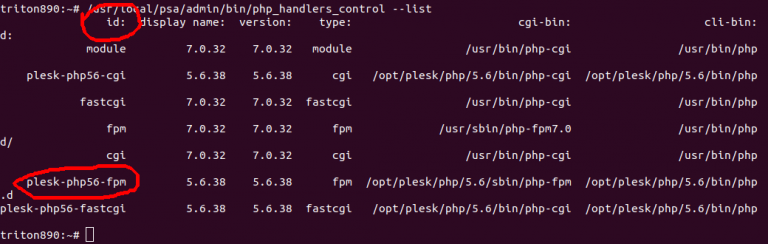
    To change PHP version for a site, first find available PHP handlers, this can be done with command

    /usr/local/psa/admin/bin/php_handlers_control --list
    

    Plesk Change PHP version

    You need to find the id for the PHP handler. For PHP 5.6 fpm, it is “plesk-php56-fpm”.

    To change a sites PHP version to PHP 5.6, run

    plesk bin domain -u DOMAIN_NAME_HERE -php_handler_id plesk-php56-fpm
    

    Example

    Plesk change PHP handler

  • error: ‘x264_bit_depth’ undeclared (first use in this function)

    When installing ffmpeg, i get error

    CC	libavcodec/libvorbisenc.o
    CC	libavcodec/libx264.o
    libavcodec/libx264.c: In function ‘X264_frame’:
    libavcodec/libx264.c:282:9: error: ‘x264_bit_depth’ undeclared (first use in this function)
         if (x264_bit_depth > 8)
             ^
    libavcodec/libx264.c:282:9: note: each undeclared identifier is reported only once for each function it appears in
    libavcodec/libx264.c: In function ‘X264_init_static’:
    libavcodec/libx264.c:892:9: error: ‘x264_bit_depth’ undeclared (first use in this function)
         if (x264_bit_depth == 8)
             ^
    make: *** [libavcodec/libx264.o] Error 1
    

    This is due to incompatability with ffmpeg and x264.

    What you can do is try another version of x264. You will be able to download older version of x264 from

    ftp://ftp.videolan.org/pub/x264/snapshots

    On 2018-08-14, it failed with latest stable snapshot. So i tried 14 days old stable snapshot

    cd /usr/local/src/
    wget ftp://ftp.videolan.org/pub/x264/snapshots/x264-snapshot-20180730-2245-stable.tar.bz2
    tar xvf x264-snapshot-20180730-2245-stable.tar.bz2
    cd /usr/local/src/x264-snapshot-20180730-2245-stable
    make clean && make distclean
    ./configure --prefix=/usr --enable-shared
    make && make install
    ldconfig
    

    This worked with ffmpeg.

    Solution here is to try latet version first, if it did not work, try older version, say try 1 month old version, if that did not work, go back 2 months, see if that works.

    Now install ffmpeg with

    cd /usr/local/src/
    wget https://github.com/FFmpeg/FFmpeg/archive/n3.3.5.tar.gz
    tar zxf n3.3.5.tar.gz
    cd /usr/local/src/FFmpeg-n3.3.5/
    ldconfig
    make clean && make distclean
    ./configure --prefix=/usr --enable-shared --enable-libxvid --enable-libvorbis --enable-libtheora --enable-libmp3lame --enable-gpl --enable-libfdk-aac --enable-nonfree --enable-libx264 --enable-libfreetype
    make && make install && ldconfig
    
  • Enable Zend OPcache in PHP

    Enable Zend OPcache in PHP

    To enable Zend OPCache in PHP, edit php.ini add following to end of the file

    zend_extension=opcache.so
    

    Now you may need to adjust some settings, in php.ini uncomment following, change values as needed.

    opcache.enable=1
    opcache.enable_cli=1
    opcache.memory_consumption=128
    opcache.max_accelerated_files=10000
    opcache.validate_timestamps=1
    opcache.revalidate_freq=10
    

    Verify it with

    [root@vps154294 php]# php -m | grep  Zend
    Zend OPcache
    [Zend Modules]
    Zend OPcache
    [root@vps154294 php]# 
    

    Restart web server. If you using php-fpm or fcgi, you need to restart the process.

    phpinfo() will show

    Zend OPcache in phpinfo

  • Install Redis PHP Module from source

    To install Redis PHP module from source, run

    cd /usr/local/src
    git clone https://github.com/phpredis/phpredis.git
    cd /usr/local/src/phpredis
    /usr/serverok/php-7.1.12/bin/phpize
    ./configure --with-php-config=/usr/serverok/php-7.1.12/bin/php-config
    make && make install
    

    Once installed, edit your php.ini file, add following below extension_dir line

    extension=redis.so
    

    Verify redis is installed with php -m

    [root@vps154294 ~]# /usr/serverok/php-7.1.12/bin/php -m | grep redis
    redis
    [root@vps154294 ~]# 
    

    Now restart web server

    service httpd restart
    

    phpinfo() will show following

    phpinfo redis

  • Reset osticket admin password

    Reset password for admin, can be used for any user, replace admin with username.

    UPDATE `ost_staff` SET `passwd` = MD5( 'newpassword' ) WHERE `username` = 'admin';
    

    See osticket